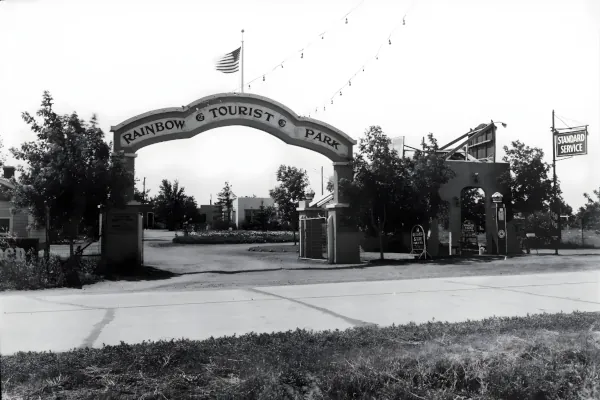
The story of Rainbow Gardens is more than a chapter in Carrington’s history — it is a story of ambition, creativity, hardship, and resilience.
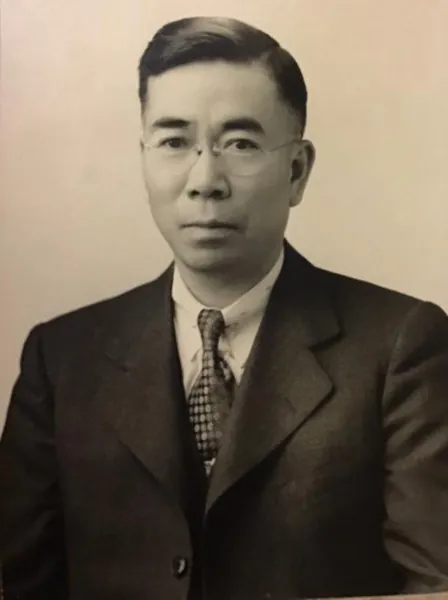
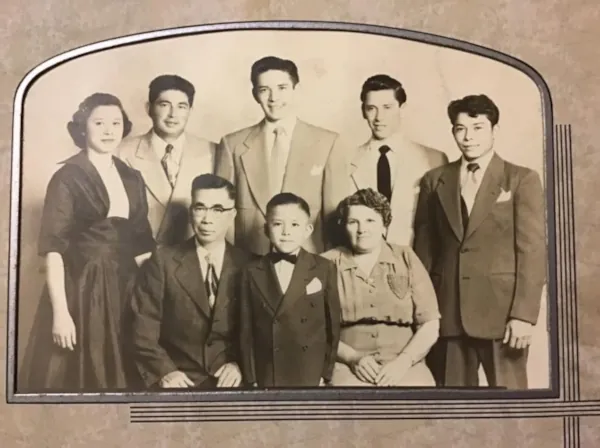
At its center is Harry Hayashi, a Japanese immigrant whose vision transformed a stretch of prairie into one of the region’s most remarkable destinations.
From prairie to destination
Carrington Rainbow Gardens traces its roots back to the early 20th century, when Harry Hayashi arrived in the United States with little more than determination and a willingness to work.
Born in Tokyo in 1894, Hayashi came to America at the age of 16, eventually building a new life in the Midwest before settling in Carrington, North Dakota in 1921.
Through persistence and entrepreneurial spirit, he established himself in the local community: first through his work and later through his own business ventures. What began as a personal journey would soon evolve into something much greater.
Building a dream (1920s–1930)
In 1922, Hayashi opened the Hotel Café in Carrington, quickly earning a reputation for quality and hospitality.
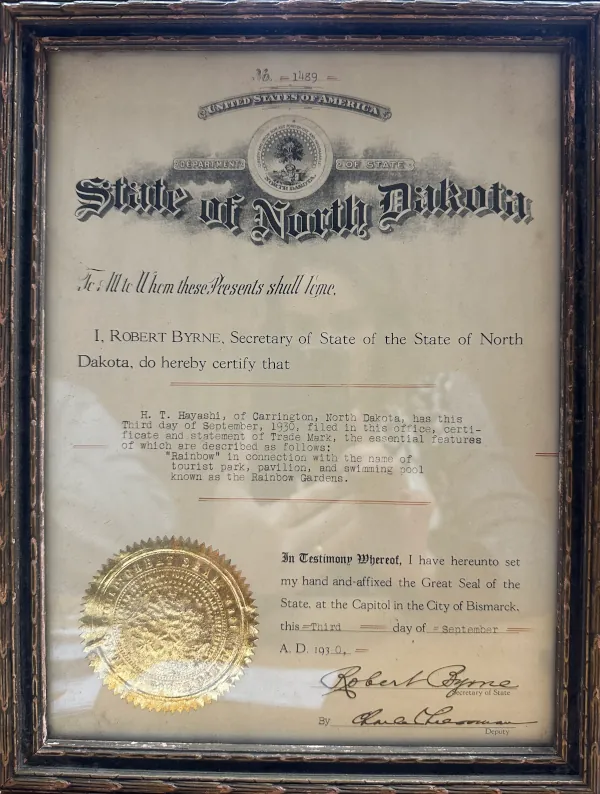
By the late 1920s, his ambitions expanded beyond the restaurant business. He purchased five acres of open prairie on the edge of town, land that would become the foundation of Rainbow Gardens.
With a vision inspired in part by his Japanese heritage, Hayashi began transforming the barren landscape into a place unlike anything Carrington had ever seen.
A garden unlike any other (1930–1934)
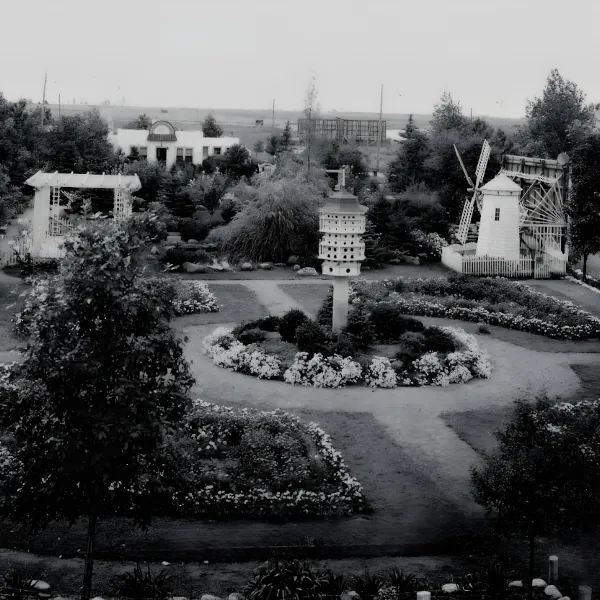
When Rainbow Gardens opened in the early 1930s, it quickly became one of the most distinctive destinations in the region.
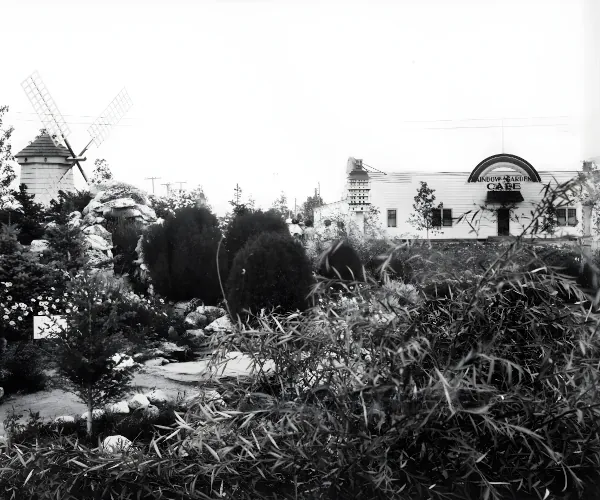
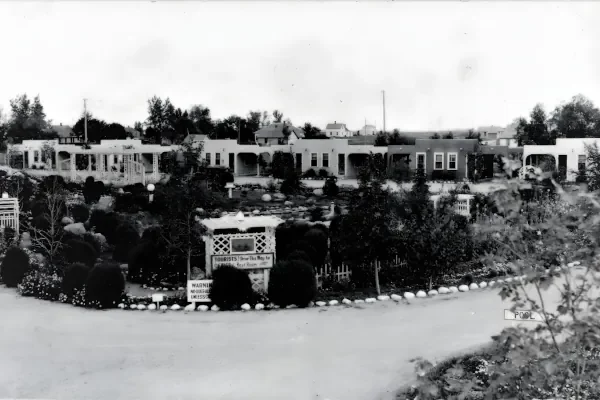
The site featured a unique combination of hospitality, landscape design, and entertainment:
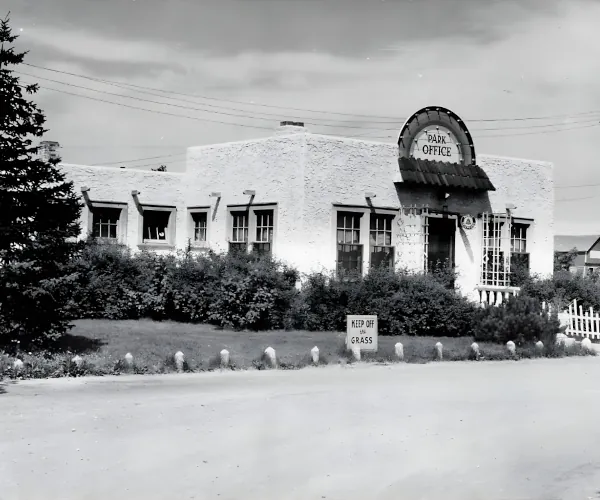
Colorful Spanish-style cabins for travelers
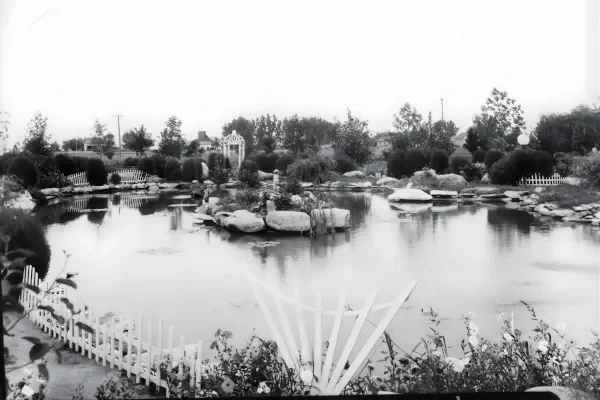
A large lily pond and flowing water features
A handcrafted waterfall and winding garden paths
A birdhouse designed to host 108 families of birds
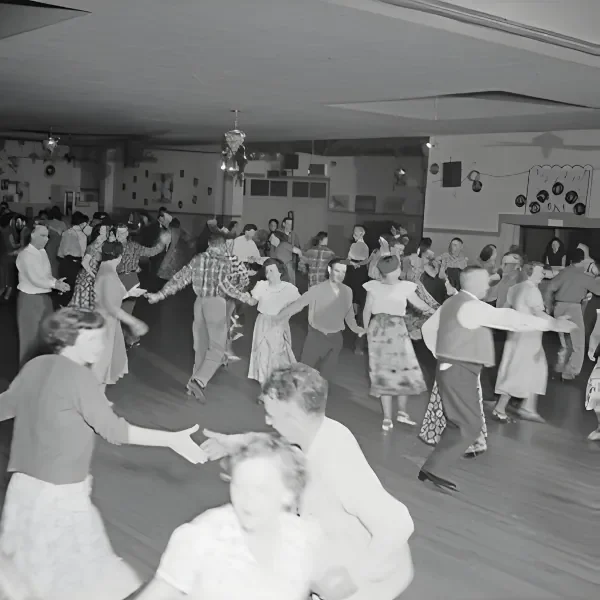
A dance pavilion and open-air gathering spaces
The design reflected both creativity and craftsmanship, blending natural elements with carefully constructed features to create a place that felt immersive and memorable.
Hayashi himself performed much of the labor, shaping the landscape stone by stone. Rainbow Gardens was not just a business: it was a personal vision brought to life.
A regional landmark (1930s)
By the mid-1930s, Rainbow Gardens had become a vibrant social and cultural destination. Visitors traveled from across the region to experience its unique atmosphere, with Wednesday night band events drawing large crowds for music, dancing, and community gatherings.
The popularity of the gardens, along with its community gatherings and dances, helped earn Carrington the title of “Central City,” reinforcing its role as a regional hub.
The venue hosted live performances and became known as one of Carrington’s most important attractions, recognized even beyond the local area.
For a time, Rainbow Gardens stood as a symbol of innovation, hospitality, and community life.
War, internment and loss (1942–1945)
The success of Rainbow Gardens came to a sudden and devastating halt during World War II.
In 1942, following the attack on Pearl Harbor, Harry Hayashi was arrested and interned at Fort Lincoln near Bismarck, the only Japanese resident of North Dakota to be detained.
While he was held as an “enemy alien,” his family was left to manage the aftermath. Bank accounts were frozen, operations were disrupted and the once-thriving property began to fall into decline.
Despite these hardships, Hayashi’s family endured, working under difficult conditions to survive and preserve what they could.
Return and transition (1945–1954)
After four years of internment, Hayashi returned to Carrington in 1945 and attempted to restore Rainbow Gardens.
Although the property briefly reopened, the long-term effects of the war and his declining health made it difficult to sustain.
In 1948, the property was sold, marking the end of the Hayashi family’s direct involvement.
Hayashi continued working and opened a new business, the Miami Grill, but his health continued to deteriorate.
In 1954, he passed away at the age of 60 following complications from a workplace injury.
Just days later, confirmation of his eligibility for U.S. citizenship arrived — a poignant and symbolic moment in his life story.
The end of the original site (1950s–1972)
In 1953, a major fire destroyed key structures at Rainbow Gardens, including the dance hall and café.
Although parts of the site were rebuilt, the original character of the gardens gradually faded.
By 1972, the remaining structures were removed to make way for new development, bringing the physical history of Rainbow Gardens to an end.
What remained was the memory of a place that had once brought people together.
Remembering Rainbow Gardens
Even after its disappearance, the story of Rainbow Gardens continued to live on in Carrington.
Through historical records, family archives and community memory, the legacy of Harry Hayashi and his creation remained an important part of the region’s identity.
In recent years, efforts to preserve and share this history have grown, ensuring that future generations can understand its significance.
Reimagining the Future
Today, Carrington Rainbow Gardens is being reimagined as a new Japanese-inspired garden and interpretive destination.
This project seeks to honor the original vision while creating a space that reflects the values of the present: community, reflection and connection.
It is not a reconstruction of the past, but a continuation of its spirit.